Category: Uncategorized
-

Halliburton Hit by Major Cyberattack: Operations Disrupted
Houston, Texas – US oilfield giant Halliburton has confirmed a significant cyberattack that disrupted its systems at its North Houston campus. The breach, believed to be a ransomware attack, has caused significant operational disruptions and prompted the company to advise employees to avoid connecting to internal networks.
While specific details about the attack remain limited, sources familiar with the matter indicate that it has impacted both the company’s local operations in Houston and its global connectivity networks. Halliburton has acknowledged the incident and is actively working with leading cybersecurity experts to address the issue and minimize its impact.
As one of the world’s largest oilfield services companies, Halliburton’s operations are critical to the global energy industry. The attack highlights the growing threat of cybercrime, particularly ransomware, which has become increasingly sophisticated and lucrative for attackers.
Ransomware Attacks on the Rise
Ransomware attacks, which involve encrypting a victim’s data and demanding a ransom payment for its release, have seen a surge in recent years. According to industry estimates, the cost of ransomware attacks is expected to reach over $200 billion annually by the end of the decade.
The energy sector has been a prime target for ransomware attackers due to its critical infrastructure and reliance on technology. In 2021, the Colonial Pipeline was hit by a ransomware attack that led to widespread fuel shortages and economic disruption.
Halliburton’s Response
Halliburton is currently assessing the full extent of the damage caused by the cyberattack and working to restore its systems. The company has not disclosed whether it plans to pay a ransom or if it has been able to recover any of its encrypted data.
As the investigation into the attack continues, it is likely that more details will emerge about the nature of the threat and the potential impact on Halliburton’s operations and customers. The incident serves as a stark reminder of the need for robust cybersecurity measures to protect critical infrastructure and prevent future disruptions.
Media Disclaimer: This report is based on internal and external research obtained through various means. The information provided is for reference purposes only, and users bear full responsibility for their reliance on it. Summitsystemsissp assumes no liability for the accuracy or consequences of using this information.
-

North Korean Hackers Target Universities in Data Theft Campaign
North Korea’s advanced persistent threat (APT) group, Kimsuky, has significantly escalated its cyberattacks on universities worldwide, according to new findings from cybersecurity firm Resilience.
Known for its relentless pursuit of sensitive information, Kimsuky has historically focused on South Korean government entities and think tanks. However, recent evidence indicates a broadening scope, with universities emerging as prime targets for the group’s espionage operations.
Sophisticated Phishing and Data Exfiltration
Resilience’s investigation revealed that Kimsuky employs highly sophisticated phishing campaigns, often masquerading as academics or journalists to gain the trust of university staff, researchers, and professors. Once inside university networks, the group actively seeks out valuable research data and intellectual property that can benefit North Korea’s limited scientific community.
The stolen information is believed to be directly channeled to the Reconnaissance General Bureau (RGB), North Korea’s primary foreign intelligence agency. This aligns with the regime’s broader goal of acquiring advanced technologies and knowledge to bolster its military and economic capabilities.
Expanding Threat Landscape
Beyond its espionage activities, there’s growing evidence suggesting that Kimsuky is also involved in financially motivated cybercrime. This dual-pronged approach could be a strategic move to fund the group’s operations while simultaneously advancing North Korea’s geopolitical interests.
Resilience’s analysis highlighted Kimsuky’s use of custom-built tools, such as “SendMail,” to distribute phishing emails and capture login credentials. The group’s ability to adapt and refine its tactics underscores the persistent and evolving nature of the threat posed by state-sponsored cyber actors.
Protecting Against Kimsuky Attacks
To mitigate the risk of falling victim to Kimsuky’s attacks, Resilience recommends the following measures:
- Implement strong multi-factor authentication (MFA): Using phish-resistant MFA methods, such as hardware tokens or push notifications, can significantly enhance account security.
- Verify website authenticity: Users should carefully examine website URLs before entering sensitive information, as Kimsuky often employs phishing pages that closely mimic legitimate university portals.
- Regular security awareness training: Educating employees about the latest phishing tactics can help prevent successful attacks.
- Leverage threat intelligence: Staying informed about the latest threat landscape can enable organizations to proactively identify and address potential vulnerabilities.
As the threat from state-backed cyber groups continues to grow, universities and other organizations must invest in robust cybersecurity measures to protect their sensitive data and intellectual property.
Media Disclaimer: This report is based on internal and external research obtained through various means. The information provided is for reference purposes only, and users bear full responsibility for their reliance on it. Summitsystemsissp assumes no liability for the accuracy or consequences of using this information.
-
Extensive Data Breach at UK Government Linked to Russian Espionage
A cyberespionage operation conducted by Russia’s foreign intelligence service earlier this year compromised the personal data and emails of British government officials. The attack, previously unreported, exploited a breach at Microsoft, which provides corporate services to the UK’s Home Office.
The hackers initially targeted Microsoft before leveraging their access to infiltrate the email accounts and data of several of the tech giant’s clients, including the British government. While the Home Office’s systems were not directly compromised, sensitive corporate email data shared between the department and Microsoft, and hosted by the latter, was stolen.
Microsoft first disclosed in January that a hacking group, later attributed to Russia’s SVR intelligence agency, had accessed the email accounts of its senior executives. Subsequently, the company confirmed that the hackers had also infiltrated customer emails and internal systems.
Despite Microsoft’s early warning, the Home Office only reported the incident to the UK’s data protection regulator, the ICO, in May. This delay contravenes British data protection laws, which mandate reporting data breaches within 72 hours of discovery.
The ICO has since concluded that no further action is necessary. However, experts warn that the stolen data could pose a significant risk to the UK government and its officials.
Christopher Steele, a former British intelligence officer, described the attack as part of a more aggressive stance adopted by the Kremlin since the invasion of Ukraine. James Sullivan, a cyber research director, emphasized the need for greater vendor diversity to mitigate risks associated with relying on a small number of providers for critical services.
Microsoft has denied any compromise of its customer-facing systems and claimed to have notified affected customers. However, the extent of the damage caused by the breach remains unclear.
Key Points:
- Russian hackers targeted Microsoft and exploited access to steal data from clients, including the UK government.
- Home Office data was not directly compromised, but corporate email data shared with Microsoft was stolen.
- The UK government delayed reporting the incident to the data protection regulator.
- Experts warn of the potential risks posed by the stolen data and the need for greater vendor diversity.
Media Disclaimer: This report is based on internal and external research obtained through various means. The information provided is for reference purposes only, and users bear full responsibility for their reliance on it. Summitsystemsissp assumes no liability for the accuracy or consequences of using this information.
-
Eighteen-Year-Old Vulnerability Allows Attackers to Bypass All Browser Defenses
Researchers at Oligo Security have uncovered a critical, 18-year-old vulnerability dubbed “0.0.0.0 Day” that poses a severe threat to all major web browsers, including Chrome, Firefox, and Safari. This flaw allows malicious websites to circumvent robust browser security measures and directly interact with services operating on a local network. The potential consequences are dire, including unauthorized access, data breaches, and even remote code execution.
How Does It Work?
The root of the problem lies in the inconsistent implementation of security mechanisms across different browsers and a general lack of standardization within the industry. The seemingly innocuous IP address, 0.0.0.0, often used as a placeholder, has been exploited to grant attackers access to local services, ranging from development tools to core operating system components.
By leveraging this vulnerability, malicious actors can:
- Bypass browser security: Circumventing safeguards designed to protect users.
- Access local services: Gain unauthorized entry to applications and systems on the same network.
- Steal data: Exfiltrate sensitive information from compromised devices.
- Execute malicious code: Take complete control of affected systems.
The use of the 0.0.0.0 Day vulnerability allows attackers to port scan users, potentially leading to the identification of open ports and vulnerable services.
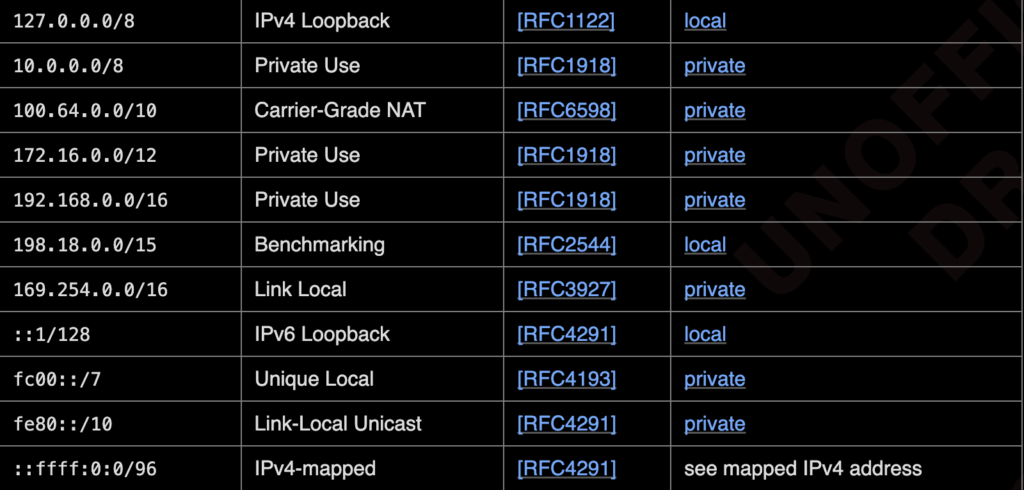
Google’s introduction of Private Network Access (PNA) aims to extend CORS by restricting websites’ ability to send requests to servers on private networks. PNA proposes distinguishing between public, private, and local networks, preventing requests from being sent to more secure contexts.
According to the current PNA specification, the following IP segments are considered private or local:
Putting 0.0.0.0 To the Test: PNA Bypass
A Longstanding Issue
A bug report dating back to 2006 highlights the persistent nature of this problem. Despite numerous attempts to address it, the issue has remained unresolved until now. The lack of industry-wide standards for browser security has created an environment ripe for exploitation.
Impact and Mitigation
The implications of the 0.0.0.0 Day vulnerability are far-reaching, affecting both individuals and organizations. While the risk is heightened for users running macOS and Linux (Windows systems are less vulnerable due to OS-level protections), everyone is at risk.
To mitigate the threat, browser vendors are actively working on patches and updates. Google Chrome and Chromium-based browsers are leading the charge with the implementation of Private Network Access (PNA), a feature designed to restrict website access to private networks. However, full protection will require time.
Following responsible disclosure, browser vendors have acknowledged the security flaw and are working to implement browser-level mitigations.
Google Chrome (and Chromium-based browsers like Edge)
- PNA Initiative: Evolving Private Network Access (PNA) led by Google.
- Vulnerability: 0.0.0.0 bypasses PNA, allowing access to private IPs.
- Fix Rollout: Blocking 0.0.0.0 from Chrome 128, fully effective by Chrome 133.
- Statistics: 0.015% of websites (around 100K) communicate with 0.0.0.0.
Apple Safari
- WebKit Changes: Now blocks 0.0.0.0 access.
- Implementation: Requests to all-zero IP addresses are blocked.
Mozilla Firefox
- Current Status: No immediate fix; PNA not initially implemented.
- Specification Update: Fetch specification updated to block 0.0.0.0.
- Future Plans: Implementation of PNA will eventually block 0.0.0.0.
A Call for Industry Collaboration
The discovery of the 0.0.0.0 Day vulnerability underscores the urgent need for greater collaboration among browser developers. Establishing standardized security protocols and practices is essential to prevent similar vulnerabilities from emerging in the future.
Until robust security measures are fully implemented, users are advised to exercise caution when browsing the web and avoid clicking on suspicious links or downloading files from unknown sources.
Media Disclaimer: This report is based on internal and external research obtained through various means. The information provided is for reference purposes only, and users bear full responsibility for their reliance on it. Summitsystemsissp assumes no liability for the accuracy or consequences of using this information.
