Category: Uncategorized

  • AI Biometric Scam Warning: Fact, Fiction, and What You Really Need to Know

    AI Biometric Scam Warning: Fact, Fiction, and What You Really Need to Know

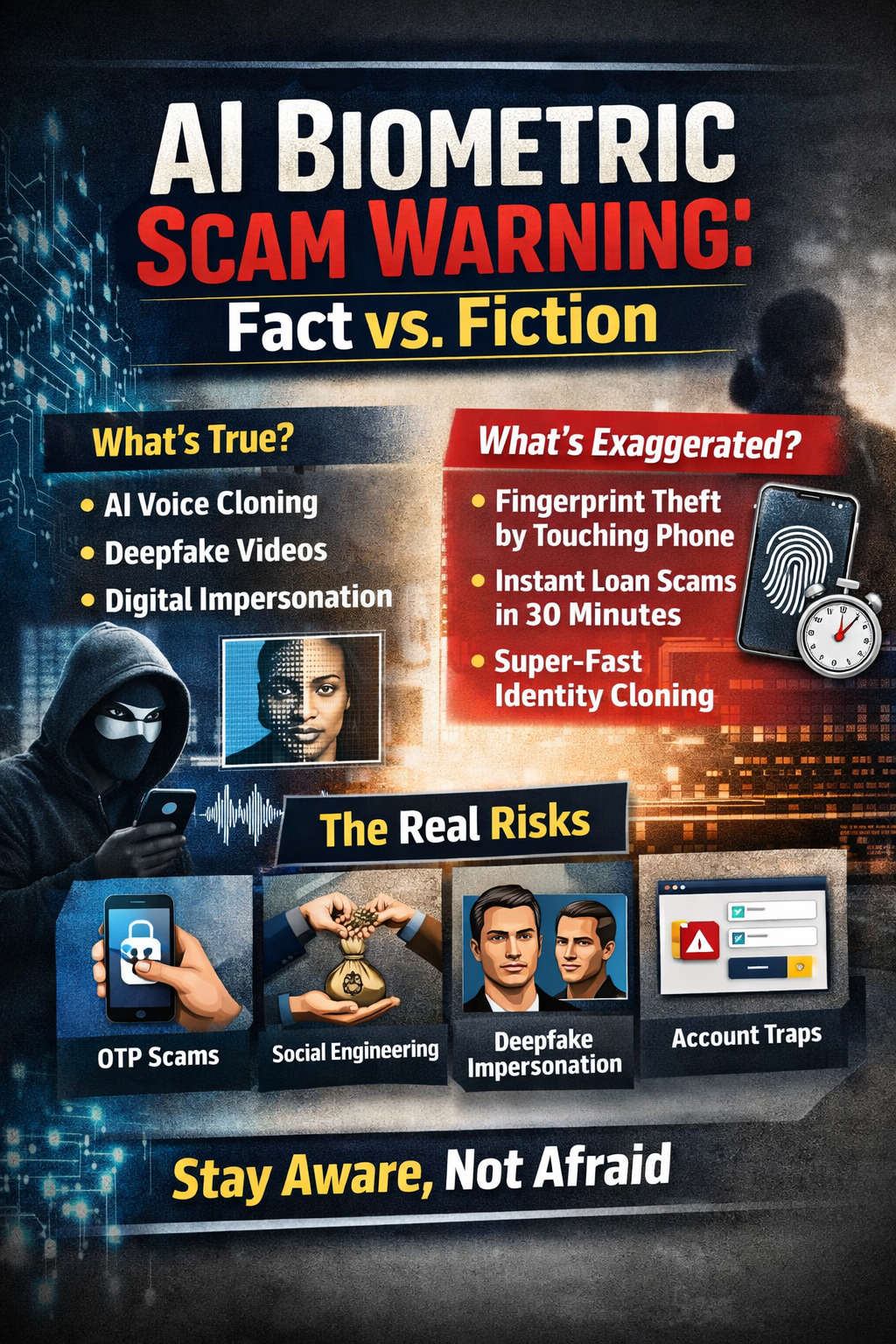
    Recently, a disturbing message has been circulating across WhatsApp and other social media platforms. The message warns of well-dressed strangers approaching people in public places — malls, markets, and transport stations — asking for help operating their phone. According to the claim, the phone is secretly recording video, capturing your fingerprint, voice, and facial data. Within 30 minutes, scammers allegedly use artificial intelligence (AI) to clone your identity and take out loans in your name.

    The message ends with urgent warnings: never help strangers with their phones, never read numbers aloud, and share the message to save others.

    It sounds alarming. But how much of it is actually true?

    Let’s examine the facts carefully.

    Understanding the Viral Claim

    The viral warning frames this as a new kind of “AI biometric identity scam.” It claims scammers are no longer interested in stealing your money directly — instead, they want your biometric data. According to the message, simply touching a stranger’s phone can capture your fingerprint, and speaking while looking at the screen allows AI to clone your voice and face.

    The scenario suggests that within minutes, scammers can create a digital version of you and use it to access financial services, apply for loans, and leave you with debt.

    The emotional tone is urgent and fear-driven, designed to make readers react quickly.

    But cybersecurity must be based on facts, not fear.

    What Is True: AI Voice and Face Cloning Exist

    Artificial intelligence has advanced significantly in recent years. Today’s AI tools can:

    • Clone a person’s voice using short audio samples
    • Generate realistic face videos known as deepfakes
    • Mimic facial expressions and speech patterns

    These technologies are real and are already being used in entertainment, research, and unfortunately, sometimes in scams.

    Digital impersonation is a genuine cybersecurity concern.

    However, having the technology and successfully using it to commit financial fraud instantly are two very different things.

    What Is Misleading: Fingerprint Theft by Touching a Phone

    One of the most alarming claims in the viral message is that touching a stranger’s phone allows scammers to capture your fingerprint.

    In reality, modern smartphones do not work this way.

    Fingerprint authentication systems:

    • Store encrypted fingerprint templates locally on the device
    • Do not store or expose actual fingerprint images to apps
    • Do not transmit fingerprint data through video calls or recordings

    Simply touching someone’s phone cannot transfer your fingerprint into their system.

    This part of the message is highly misleading and not supported by how biometric security works.

    Can Scammers Clone You and Take Loans in 30 Minutes?

    This is another major exaggeration.

    Financial institutions typically use multiple layers of security, including:

    • BVN (Bank Verification Number) or NIN verification in Nigeria
    • One-Time Passwords (OTP) sent to your registered phone number
    • Device authentication
    • Linked bank account verification
    • Multi-factor authentication

    Even with advanced AI, face or voice data alone is usually not enough to open accounts, approve loans, or transfer funds.

    Identity theft is possible, but it typically requires more information and access — not just a brief interaction in a public place.

    Real Risks That Actually Exist

    While the viral story exaggerates the threat, some real risks do exist in public and online interactions.

    These include:

    OTP scams: If you read a verification code sent to your phone aloud, scammers can use it to access your accounts.

    Social engineering: Scammers manipulate people using urgency, trust, or emotional pressure.

    Account login traps: Being tricked into entering your credentials on someone else’s device.

    Deepfake impersonation: Using publicly available videos and audio from social media to mimic individuals.

    These threats are real — but they typically require more direct cooperation or information from the victim.

    Why Fear-Based Messages Spread Quickly

    Messages like this often go viral because they use powerful psychological triggers, including:

    • Urgency (“30 minutes can ruin your life”)
    • Fear (“They don’t want your money. They want your identity.”)
    • Authority tone
    • Instructions to forward immediately

    Fear spreads faster than facts, especially when new technologies like AI are involved.

    People are more likely to share warnings that feel urgent, even if they are exaggerated.

    Practical Safety Tips Without Panic

    Instead of reacting with fear, focus on simple, effective digital safety practices:

    • Never share your OTP codes with anyone
    • Avoid logging into personal accounts on unfamiliar devices
    • Be cautious when handling strangers’ phones
    • Disconnect suspicious or unexpected video calls
    • Limit sharing sensitive personal content publicly
    • Enable multi-factor authentication on important accounts

    These basic precautions significantly reduce your risk.

    You do not need paranoia — you need awareness.

    Final Verdict: Real Technology, Exaggerated Scenario

    The viral “AI biometric cloning in 30 minutes” warning contains a mix of truth and exaggeration.

    AI voice and face cloning technologies are real.

    But the claim that scammers can instantly steal your fingerprint and drain your finances within minutes simply by handing you a phone is highly unlikely.

    The real threat is not magical AI identity theft in public spaces.

    The real threat is social engineering — scammers manipulating trust, urgency, and human behavior.

    Closing Thoughts

    Artificial intelligence is powerful, and its misuse is a legitimate concern. But misinformation and fear-based warnings can be just as harmful, causing panic and confusion.

    Before sharing alarming messages, take a moment to verify the facts.

    Cybersecurity is strongest when guided by knowledge, awareness, and calm decision-making — not fear.

    Media Disclaimer: This report is based on internal and external research obtained through various means. The information provided is for reference purposes only, and users bear full responsibility for their reliance on it. Summitsystemsissp assumes no liability for the accuracy or consequences of using this information
  • Happy New Year from all of us at Summit Systems ISSP!

    As we step into this new year, we want to sincerely appreciate everyone who has been part of our journey and success.

    To our partners and collaborators, thank you for your trust, strong partnerships, and continued support. Together, we are building resilient systems and shaping a more secure digital future.

    To our team members and colleagues, your dedication, professionalism, and passion remain the driving force behind our vision. Your commitment to excellence does not go unnoticed.

    To our trainees, interns, and learners, thank you for choosing Summit Systems ISSP. Your curiosity, discipline, and eagerness to grow in cybersecurity inspire us daily. We are proud to be part of your professional journey.

    To our facilitators, mentors, instructors, and reviewers, thank you for generously sharing your knowledge, guidance, and expertise. Your impact continues to shape the next generation of cybersecurity professionals.

    To our supporters, clients, community members, and well-wishers, we appreciate your encouragement and belief in our mission.

    As we embrace the year ahead, we look forward to stronger collaborations, greater impact, innovation, and shared success.

    Here’s to a year of growth, excellence, and new opportunities for us all.

    #HappyNewYear #SummitSystemsISSP #Cybersecurity #Gratitude #Growth #Collaboration #Excellence

  • FinWise Bank Breach: 689,000 Customers Affected in Major Insider Incident

    FinWise Bank Breach: 689,000 Customers Affected in Major Insider Incident

    FinWise Bank, a U.S.-based institution offering embedded banking services, is facing serious fallout from a recent data breach in which a former employee is alleged to have accessed sensitive customer information. An estimated 689,000 individuals have been affected.

    The incident, which reportedly took place on May 31, 2024, remained undetected until June 18, 2025, and customers were formally notified in late July 2025.


    What Data Was Compromised

    While some details remain redacted, publicly disclosed information indicates that the following personal data may have been accessed:

    • Full names
    • Dates of birth
    • Social Security numbers
    • Account numbers

    Because these are types of data often used in identity verification, theft or fraud, the risk to affected individuals is material.

    Risks & Impact

    Some of the risks to affected individuals include:

    • Identity Theft: usage of SSNs, birth dates could allow fraudsters to open credit lines, commit loans, etc.
    • Financial Fraud: unauthorized access to bank or account numbers.
    • Phishing / Social Engineering: exposure of personal data makes individuals more vulnerable.
    • Long-term Risk: effects could surface over months/years; just because there’s no immediate harm doesn’t mean future risk is low.

    For the institution and its partners, the damage includes reputational harm, regulatory exposure (for delayed notification), and potential class-action litigation. Indeed, law firms such as Edelson Lechtzin LLP are already investigating possible claims.


    What Went Right

    Not everything failed—in response to the breach, FinWise:

    • Engaged outside cybersecurity professionals to conduct a forensic investigation and manual document review.
    • Offered affected customers 12 months of free credit monitoring and identity theft protection.

    What Could Have Been Better

    Based on the available information, the breach could have been mitigated or the damage reduced via:

    1. Shorter detection time — the long interval between breach and discovery increased exposure.
    2. Faster notification — regulatory and ethical best practices generally require prompt disclosure once harm is possible.
    3. Better insider access controls — ensuring former employees lose access immediately and access logs are monitored.
    4. Data minimization & segregation — storing only what’s absolutely needed and isolating sensitive info so breaches are harder to exploit.
    5. Strong oversight of third-party/affiliate relationships — since some data came via American First Finance (AFF), clarity of responsibility and security standards matters.

    Lessons for Organizations & Action Steps

    For companies wanting to avoid similar incidents, or to respond well if they occur, here are key takeaways:

    • Implement Zero-Trust and Least Privilege Principles: Ensure employees (current or former) have only the access they need for their role, revoked immediately upon role change or exit.
    • Comprehensive Logging & Monitoring: Detect anomalous access or access by accounts that should not have access. Regular audits.
    • Incident Response Planning: Have clear procedures for detection, investigation, and notification. Test them routinely.
    • Transparency & Communication: Once a breach is confirmed or seriously suspected, timely notification to affected parties and, where required, regulators.
    • Offer Remediation: Credit monitoring, identity protection services; help customers understand what to do.
    • Legal & Regulatory Compliance: Make sure data handling, notification policies align with relevant laws (e.g. data protection / breach-notification statutes in your jurisdiction).

    What Affected Individuals Should Do

    If you suspect you are among those affected, here are steps to take now:

    1. Review any notices from FinWise / American First Finance carefully. The notice should detail what data was compromised.
    2. Enroll in the credit monitoring / identity protection service offered.
    3. Monitor bank account statements, credit reports, and bills for unfamiliar activity.
    4. Consider placing a fraud alert or freezing credit reports.
    5. Change passwords (especially if any accounts use same or similar credentials).
    6. Beware of phishing or scams—breached data often leads to targeted attacks.

    Conclusion

    The FinWise Bank breach serves as a strong reminder that insider threats remain one of the hardest to defend against—especially when detection is delayed, or access isn’t tightly controlled. For organizations operating in highly regulated spaces like finance, failing to respond quickly and transparently can multiply the damage—not just financially, but in trust.

    For Summit Systems’ clients and readers: this event underscores the importance of robust security culture, rigorous access controls, and nimble incident response. It’s not enough to prevent all breaches; organizations must also prepare to detect, manage, and recover from them well.

    Media Disclaimer: This report is based on internal and external research obtained through various means. The information provided is for reference purposes only, and users bear full responsibility for their reliance on it. Summitsystemsissp assumes no liability for the accuracy or consequences of using this information

  • Cohort

    SUMMIT SYSTEMS ISSP – CYBERSECURITY TRAINING BIO DATA FORM


  • Cybersecurity Breach: 360 Total Security Compromised

    Cybersecurity Breach: 360 Total Security Compromised

    Recent research by ANY.RUN cybersecurity experts has uncovered a cunning attack campaign leveraging a new loader called PhantomLoader to distribute the malicious SSLoad malware. This campaign is particularly concerning because PhantomLoader disguises itself as a legitimate module of the popular 360 Total Security antivirus software, allowing it to bypass traditional security defenses and deliver SSLoad undetected.

    The Deceptive Disguise: PhantomLoader

    The key element in this attack is PhantomLoader. This cleverly designed loader masquerades as “PatchUp.exe,” a genuine module used by 360 Total Security. This tactic grants it significant advantages:

    • Evasion of Detection: By mimicking a trusted program component, PhantomLoader avoids raising suspicion with both security software and the user.
    • Pre-execution Advantage: PhantomLoader injects its malicious code before the legitimate software’s main function executes. This suggests a modification of the original module, giving PhantomLoader a head start in the infection process.
    • Hidden Payload Extraction: PhantomLoader utilizes XOR decryption to unveil its malicious payload hidden within the legitimate software’s executable file.

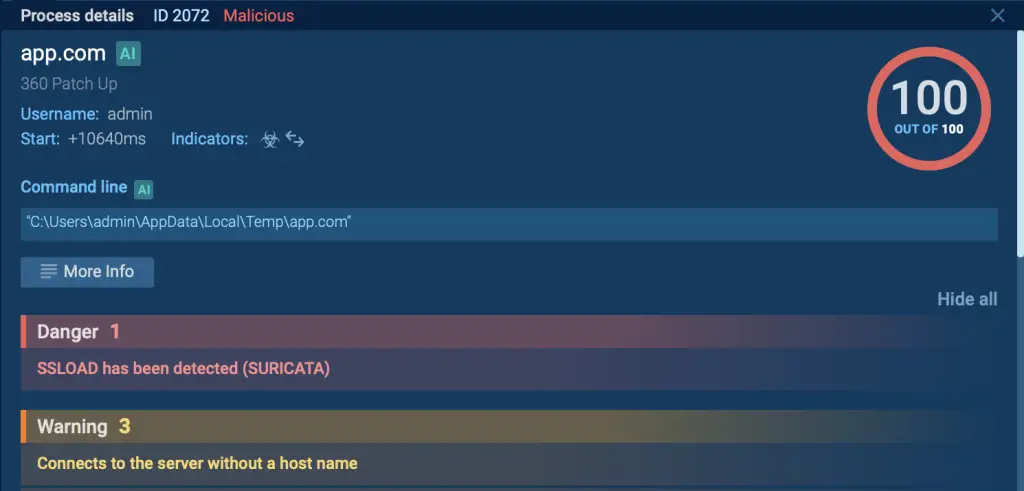
    SSLoad malware detection inside ANY.RUN’s sandbox

    The Multi-Layered Attack Process

    The attack unfolds in distinct stages, each designed for maximum stealth:

    • Stage 1: Phishing the Initial Infection
      • The attack typically begins with a phishing email containing a malicious Office document (often a Word document) as an attachment.
      • Once the user opens the document, a macro embedded within the document triggers the infection process. This highlights the importance of user awareness and caution regarding suspicious emails and attachments.
    • Stage 2: PhantomLoader Takes Over
      • Upon document execution, a new suspicious process named “app.com” launches, indicating the activation of the embedded macro and hinting at malicious activity.
      • PhantomLoader, disguised as “PatchUp.exe,” executes before the legitimate software, highlighting the potential vulnerability of compromised modules.
      • The loader utilizes XOR decryption to reveal its hidden payload within the legitimate software’s file.
      • The decrypted code, equipped with core system functions like memory allocation and DLL loading, facilitates the delivery of SSLoad directly into memory, further enhancing its ability to evade detection.
    • Stage 3: SSLoad – The Stealthy Payload
      • Once deployed, SSLoad, a Rust-based loader, takes center stage. It employs various techniques to maintain its invisibility:
        • Multi-layered String Decryption: SSLoad decrypts its strings in multiple steps, making it difficult for analysis tools to identify its true purpose.
        • Mutex Protection: SSLoad utilizes a mutex object to ensure only one instance runs on the infected system, preventing potential conflicts or reinfection attempts.
        • System Information Gathering: To adapt its actions to the specific environment, SSLoad gathers crucial details like the operating system version and system architecture.
        • Anti-analysis Techniques: SSLoad employs sophisticated measures, including anti-debugging checks, to detect and potentially terminate itself if it senses being monitored by security software.

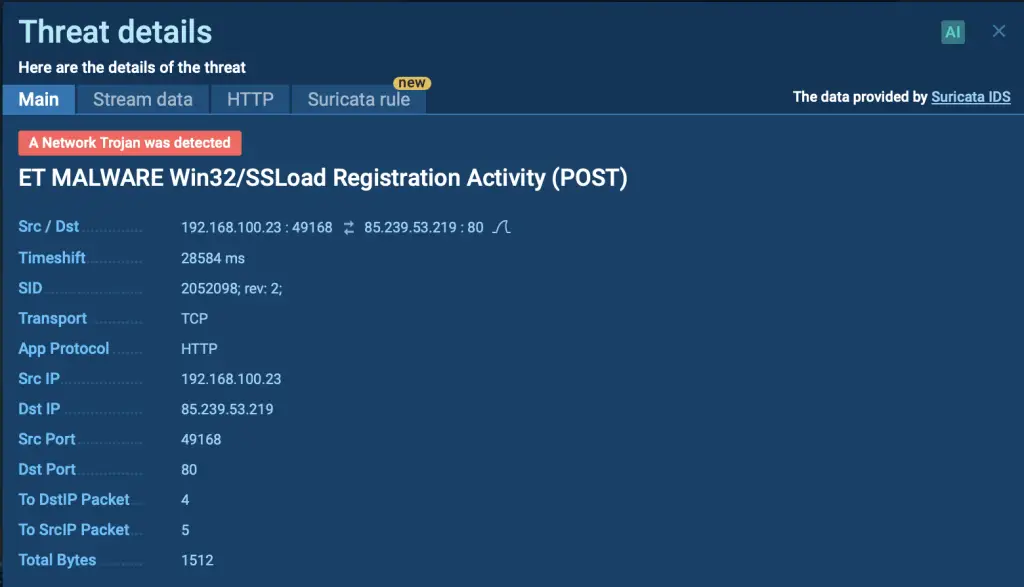
    SSLoad malware detected by Suricata rule in ANY.RUN’s sandbox

    MITRE ATT&CK Tactics Employed

    The ANY.RUN analysis revealed the attackers utilized several tactics outlined in the MITRE ATT&CK framework:

    • User Execution (Initial Access): The phishing email with the malicious document serves as the initial access vector, exploiting user interaction.
    • Deobfuscate/Decode Files or Information (Execution): PhantomLoader utilizes deobfuscation to reveal the hidden code used to load SSLoad into memory, keeping it concealed until the final stage.
    • Query Registry (Discovery): SSLoad queries the system registry to gather information about security settings and system configurations.
    • System Information Discovery (Discovery): SSLoad actively collects data about the system, including OS details, architecture, and user information, allowing it to tailor its behavior.
    • File and Directory Discovery (Discovery): Both PhantomLoader and SSLoad potentially search the system for specific files or directories that could aid in the infection process or help them hide within legitimate processes.
    • Data Manipulation (Persistence): SSLoad might modify system data or processes to maintain persistence on the infected system and potentially disrupt normal system functions.

    The Importance of Vigilance and Multi-layered Security

    This attack campaign highlights the evolving tactics of cybercriminals and underscores the importance of a layered security approach. Here are some key takeaways:

    • Phishing Awareness: Educate users about phishing tactics and the dangers of opening suspicious emails and attachments.
    • Software Updates: Ensure timely software updates for antivirus and other security applications to patch potential vulnerabilities.
    • System Monitoring: Utilize security solutions that monitor system activity and have the ability to detect unusual behavior.
    • User Caution: Encourage users to exercise caution when downloading files and visiting unknown websites.

  • CosmicBeetle Targets SMBs with ScRansom (Ransomware)

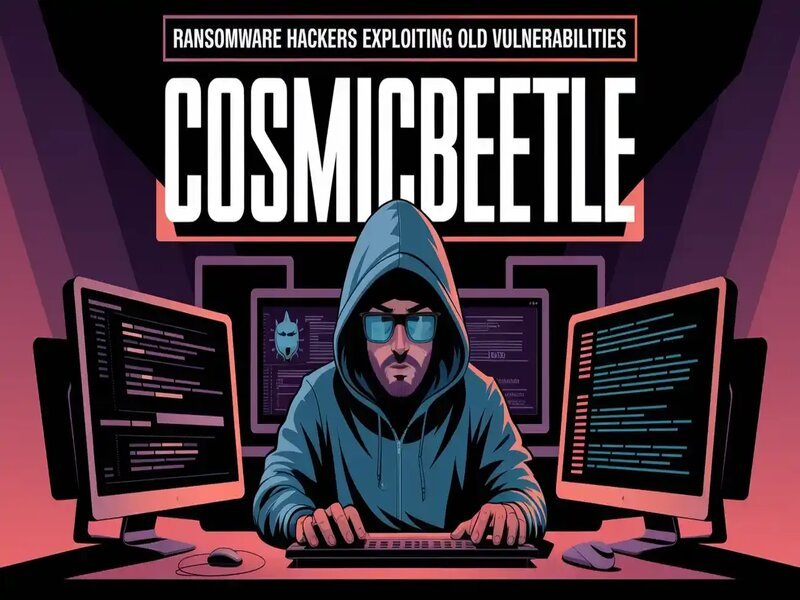
    CosmicBeetle Targets SMBs with ScRansom (Ransomware)

    CosmicBeetle, a prolific threat actor, has recently launched a new custom ransomware strain called ScRansom. This malware is being used to target small and medium-sized businesses (SMBs) across various industries, including manufacturing, pharmaceuticals, legal, education, healthcare, technology, hospitality, leisure, financial services, and regional government.  

    ScRansom is a significant upgrade from CosmicBeetle’s previous ransomware, Scarab. It’s designed to be more efficient and effective, with continuous improvements being made to its capabilities. While not considered top-tier, ScRansom is still a serious threat, capable of causing substantial damage to affected organizations.

    CosmicBeetle is known for its malicious toolset, Spacecolon, which has been used to deliver both Scarab and ScRansom to victims worldwide. The threat actor has also been associated with the NONAME moniker and has a history of experimenting with the leaked LockBit builder to impersonate the notorious LockBit ransomware gang.

    While the exact origin of CosmicBeetle remains unclear, previous analysis suggested a potential Turkish connection due to the use of a custom encryption scheme in another tool named ScHackTool. However, recent research by ESET has cast doubt on this attribution. ESET found that the encryption scheme used in ScHackTool is actually derived from a legitimate tool, the Disk Monitor Gadget, which was developed by the Turkish software firm VOVSOFT.

    CosmicBeetle’s attack chains often involve exploiting known security vulnerabilities, such as those listed in CVE-2017-0144, CVE-2020-1472, CVE-2021-42278, CVE-2021-42287, CVE-2022-42475, and CVE-2023-27532. Once they gain access to a target network, CosmicBeetle uses various tools, including Reaper, Darkside, and RealBlindingEDR, to disable security processes and avoid detection.

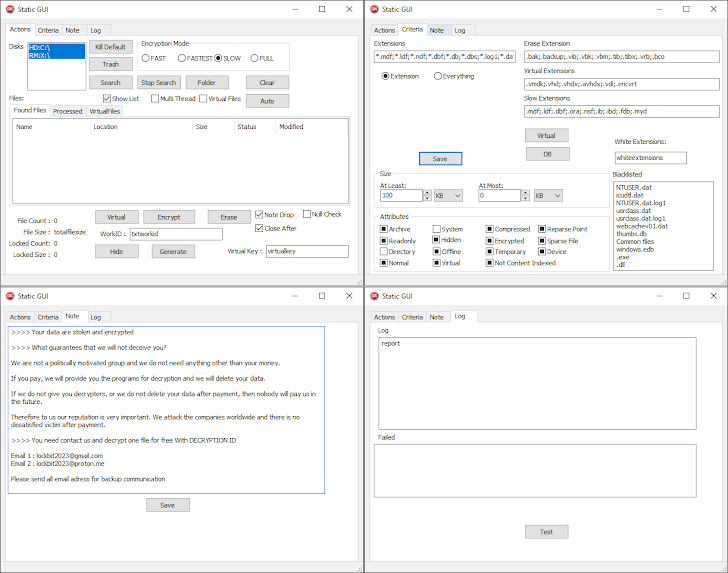
    ScRansom itself is a Delphi-based ransomware that employs partial encryption to speed up the process and an “ERASE” mode to permanently delete files. This makes it difficult for victims to recover their data without paying a ransom.

    The emergence of ScRansom highlights the ongoing threat posed by ransomware attacks. As threat actors continue to develop new and more sophisticated malware, it’s essential for organizations to stay informed about the latest threats and take proactive steps to protect their systems. Sources and related content.