Author: Cyber Security Class

  • Cybersecurity Breach: 360 Total Security Compromised

    Cybersecurity Breach: 360 Total Security Compromised

    Recent research by ANY.RUN cybersecurity experts has uncovered a cunning attack campaign leveraging a new loader called PhantomLoader to distribute the malicious SSLoad malware. This campaign is particularly concerning because PhantomLoader disguises itself as a legitimate module of the popular 360 Total Security antivirus software, allowing it to bypass traditional security defenses and deliver SSLoad undetected.

    The Deceptive Disguise: PhantomLoader

    The key element in this attack is PhantomLoader. This cleverly designed loader masquerades as “PatchUp.exe,” a genuine module used by 360 Total Security. This tactic grants it significant advantages:

    • Evasion of Detection: By mimicking a trusted program component, PhantomLoader avoids raising suspicion with both security software and the user.
    • Pre-execution Advantage: PhantomLoader injects its malicious code before the legitimate software’s main function executes. This suggests a modification of the original module, giving PhantomLoader a head start in the infection process.
    • Hidden Payload Extraction: PhantomLoader utilizes XOR decryption to unveil its malicious payload hidden within the legitimate software’s executable file.
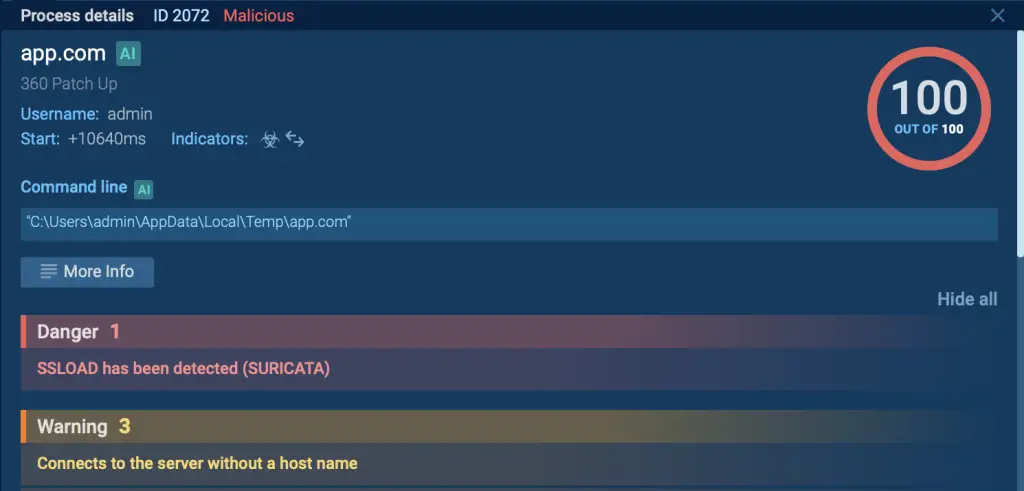
    SSLoad malware detection inside ANY.RUN’s sandbox

    The Multi-Layered Attack Process

    The attack unfolds in distinct stages, each designed for maximum stealth:

    • Stage 1: Phishing the Initial Infection
      • The attack typically begins with a phishing email containing a malicious Office document (often a Word document) as an attachment.
      • Once the user opens the document, a macro embedded within the document triggers the infection process. This highlights the importance of user awareness and caution regarding suspicious emails and attachments.
    • Stage 2: PhantomLoader Takes Over
      • Upon document execution, a new suspicious process named “app.com” launches, indicating the activation of the embedded macro and hinting at malicious activity.
      • PhantomLoader, disguised as “PatchUp.exe,” executes before the legitimate software, highlighting the potential vulnerability of compromised modules.
      • The loader utilizes XOR decryption to reveal its hidden payload within the legitimate software’s file.
      • The decrypted code, equipped with core system functions like memory allocation and DLL loading, facilitates the delivery of SSLoad directly into memory, further enhancing its ability to evade detection.
    • Stage 3: SSLoad – The Stealthy Payload
      • Once deployed, SSLoad, a Rust-based loader, takes center stage. It employs various techniques to maintain its invisibility:
        • Multi-layered String Decryption: SSLoad decrypts its strings in multiple steps, making it difficult for analysis tools to identify its true purpose.
        • Mutex Protection: SSLoad utilizes a mutex object to ensure only one instance runs on the infected system, preventing potential conflicts or reinfection attempts.
        • System Information Gathering: To adapt its actions to the specific environment, SSLoad gathers crucial details like the operating system version and system architecture.
        • Anti-analysis Techniques: SSLoad employs sophisticated measures, including anti-debugging checks, to detect and potentially terminate itself if it senses being monitored by security software.

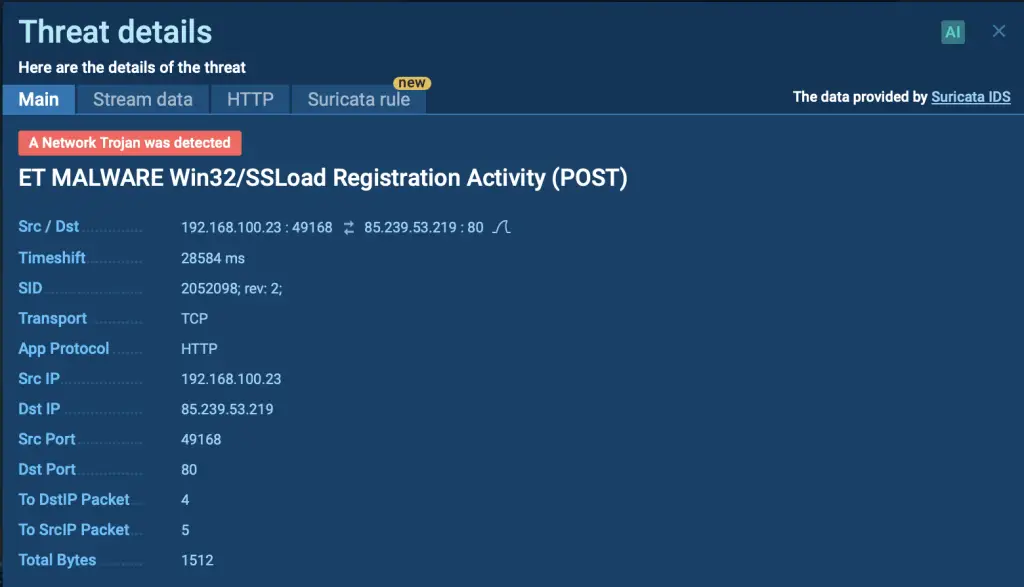
    SSLoad malware detected by Suricata rule in ANY.RUN’s sandbox

    MITRE ATT&CK Tactics Employed

    The ANY.RUN analysis revealed the attackers utilized several tactics outlined in the MITRE ATT&CK framework:

    • User Execution (Initial Access): The phishing email with the malicious document serves as the initial access vector, exploiting user interaction.
    • Deobfuscate/Decode Files or Information (Execution): PhantomLoader utilizes deobfuscation to reveal the hidden code used to load SSLoad into memory, keeping it concealed until the final stage.
    • Query Registry (Discovery): SSLoad queries the system registry to gather information about security settings and system configurations.
    • System Information Discovery (Discovery): SSLoad actively collects data about the system, including OS details, architecture, and user information, allowing it to tailor its behavior.
    • File and Directory Discovery (Discovery): Both PhantomLoader and SSLoad potentially search the system for specific files or directories that could aid in the infection process or help them hide within legitimate processes.
    • Data Manipulation (Persistence): SSLoad might modify system data or processes to maintain persistence on the infected system and potentially disrupt normal system functions.

    The Importance of Vigilance and Multi-layered Security

    This attack campaign highlights the evolving tactics of cybercriminals and underscores the importance of a layered security approach. Here are some key takeaways:

    • Phishing Awareness: Educate users about phishing tactics and the dangers of opening suspicious emails and attachments.
    • Software Updates: Ensure timely software updates for antivirus and other security applications to patch potential vulnerabilities.
    • System Monitoring: Utilize security solutions that monitor system activity and have the ability to detect unusual behavior.
    • User Caution: Encourage users to exercise caution when downloading files and visiting unknown websites.

  • Over 200 Dangerous Apps on Google Play Downloaded Millions of Times

    Over 200 Dangerous Apps on Google Play Downloaded Millions of Times

    In a shocking revelation, a recent report by threat intelligence researchers at Zscaler has exposed the alarming prevalence of malicious applications on Google Play, the official app store for Android devices. Over the course of a year, between June 2023 and April 2024, these researchers identified and analyzed numerous malware families, uncovering a staggering number of malicious apps that have been downloaded millions of times.

    The Most Common Threats

    Malicious app types on Google Play
    Source: Zscaler

    The report highlights a disturbing trend of malicious apps disguised as legitimate tools, personalization, photography, productivity, and lifestyle applications. Among the most common threats detected were:

    • Joker: An info-stealer and SMS message grabber that subscribes victims to premium services.
    • Adware: Apps that generate fraudulent ad impressions by consuming internet bandwidth and battery life.
    • Facestealer: Facebook account credential stealers that overlay phishing forms on legitimate social media applications.
    • Coper: An info-stealer and SMS message interceptor capable of keylogging and displaying phishing pages.
    • Loanly Installer, Harly, Anatsa (or Teabot), and other banking trojans targeting various financial institutions worldwide.

    Most targeted countries
    Source: Zscaler

    Google’s Response

    While Google has implemented security measures to detect and remove malicious apps, threat actors continue to find ways to bypass these safeguards. One common tactic is “versioning,” where attackers deliver malware through application updates or by loading it from external servers.

    In response to Zscaler’s findings, Google has stated that the malicious versions of the identified apps have been removed from Play. They also emphasize the role of Google Play Protect, which is enabled by default on Android devices and can warn users or block apps exhibiting malicious behavior.

    User Precautions

    To minimize the risk of infection, users are advised to:

    • Read reviews: Check for reported problems and suspicious comments.
    • Verify permissions: Ensure that the app’s requested permissions align with its intended functionality.
    • Be cautious of free apps: While free apps can be beneficial, be wary of those offering excessive features or promises.
    • Keep your device updated: Regularly install security patches and updates to protect against known vulnerabilities.

    Number of transaction blocks per month
    Source: Zscaler

    The Ongoing Threat

    Despite Google’s efforts, the threat of malicious apps on Google Play remains a significant concern. The continuous emergence of new malware families and sophisticated techniques highlights the need for ongoing vigilance from both users and developers. As the mobile landscape evolves, it is essential to stay informed about the latest threats and take proactive steps to safeguard your devices.

  • North Korean Hackers Leverage LinkedIn to Deploy RustDoor Malware Against Crypto Community

    North Korean Hackers Leverage LinkedIn to Deploy RustDoor Malware Against Crypto Community

    Cybercriminals backed by North Korea are actively targeting cryptocurrency and DeFi businesses with sophisticated social engineering campaigns that leverage LinkedIn and deploy a previously undocumented macOS backdoor called RustDoor.

    Highly Tailored Attacks: Researchers from Jamf Threat Labs recently identified an attack attempt where a crypto user was contacted on LinkedIn by someone claiming to be a recruiter for the legitimate decentralized exchange (DEX) STON.fi. This highlights the growing trend of highly personalized social engineering tactics used by North Korean threat actors, as previously warned by the FBI.

    Red Flags and Indicators: These attacks often involve requests to execute code or download applications on company devices, participate in “pre-employment tests” involving unfamiliar scripts or packages, or perform debugging exercises with unknown software.

    Evolving Tactics: The latest attack chain observed by Jamf involved sending a booby-trapped Visual Studio project as a supposed coding challenge. This project downloaded two second-stage payloads disguised as “VisualStudioHelper” and “zsh_env,” both of which deployed the RustDoor malware also known as Thiefbucket.

    RustDoor: A Stealthy Backdoor: First documented in February 2024, RustDoor is a previously undocumented macOS backdoor written in Objective-C, targeting cryptocurrency firms. Significantly, this is the first time the malware has been linked to North Korean actors. A variant called GateDoor, written in Golang, is known to target Windows machines.

    Information Theft and Persistence: The VisualStudioHelper payload functions as an information stealer, harvesting files specified in its configuration. It even attempts to steal the user’s system password by mimicking a request from Visual Studio itself. Both payloads operate as backdoors, communicating with separate command-and-control (C2) servers.

    Protecting Yourself: These findings underscore the importance of cybersecurity awareness training for employees in the crypto industry, especially developers. Be cautious of social media connections requesting to run software, and thoroughly vet unfamiliar applications before downloading. North Korean actors are adept at crafting believable personas and conducting in-depth research on their targets.

    Staying Vigilant: The cryptocurrency industry remains a lucrative target for cybercriminals. By staying informed about the latest threats and implementing robust security practices, crypto businesses can significantly reduce their risk of falling victim to these attacks.

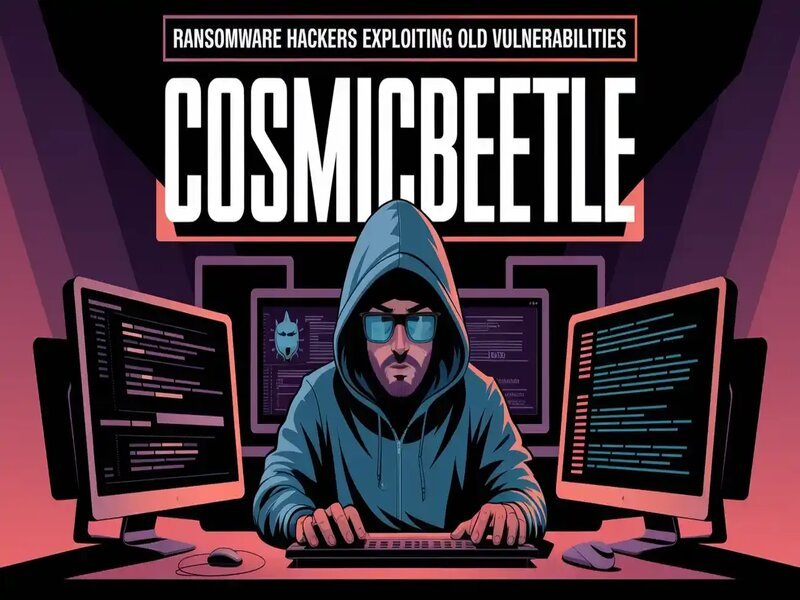
  • CosmicBeetle Targets SMBs with ScRansom (Ransomware)

    CosmicBeetle Targets SMBs with ScRansom (Ransomware)

    CosmicBeetle, a prolific threat actor, has recently launched a new custom ransomware strain called ScRansom. This malware is being used to target small and medium-sized businesses (SMBs) across various industries, including manufacturing, pharmaceuticals, legal, education, healthcare, technology, hospitality, leisure, financial services, and regional government.  

    ScRansom is a significant upgrade from CosmicBeetle’s previous ransomware, Scarab. It’s designed to be more efficient and effective, with continuous improvements being made to its capabilities. While not considered top-tier, ScRansom is still a serious threat, capable of causing substantial damage to affected organizations.

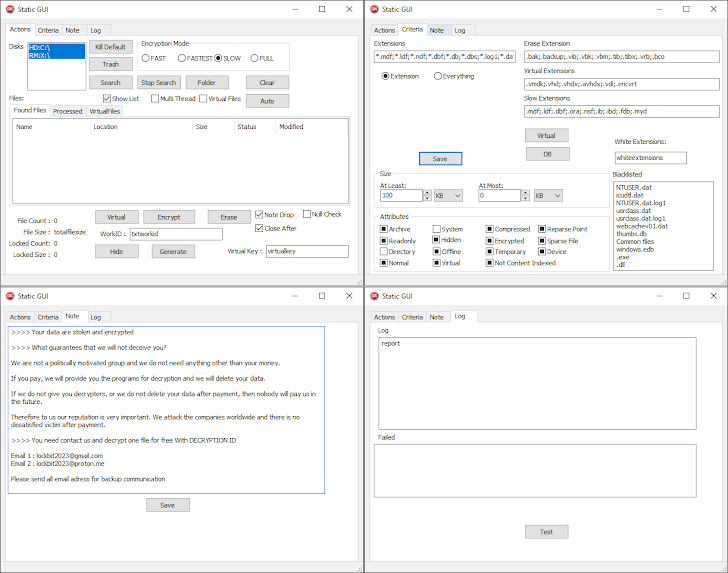
    CosmicBeetle is known for its malicious toolset, Spacecolon, which has been used to deliver both Scarab and ScRansom to victims worldwide. The threat actor has also been associated with the NONAME moniker and has a history of experimenting with the leaked LockBit builder to impersonate the notorious LockBit ransomware gang.

    While the exact origin of CosmicBeetle remains unclear, previous analysis suggested a potential Turkish connection due to the use of a custom encryption scheme in another tool named ScHackTool. However, recent research by ESET has cast doubt on this attribution. ESET found that the encryption scheme used in ScHackTool is actually derived from a legitimate tool, the Disk Monitor Gadget, which was developed by the Turkish software firm VOVSOFT.

    CosmicBeetle’s attack chains often involve exploiting known security vulnerabilities, such as those listed in CVE-2017-0144, CVE-2020-1472, CVE-2021-42278, CVE-2021-42287, CVE-2022-42475, and CVE-2023-27532. Once they gain access to a target network, CosmicBeetle uses various tools, including Reaper, Darkside, and RealBlindingEDR, to disable security processes and avoid detection.

    ScRansom itself is a Delphi-based ransomware that employs partial encryption to speed up the process and an “ERASE” mode to permanently delete files. This makes it difficult for victims to recover their data without paying a ransom.

    The emergence of ScRansom highlights the ongoing threat posed by ransomware attacks. As threat actors continue to develop new and more sophisticated malware, it’s essential for organizations to stay informed about the latest threats and take proactive steps to protect their systems. Sources and related content.

  • Halliburton Hit by Major Cyberattack: Operations Disrupted

    Halliburton Hit by Major Cyberattack: Operations Disrupted

    Houston, Texas – US oilfield giant Halliburton has confirmed a significant cyberattack that disrupted its systems at its North Houston campus. The breach, believed to be a ransomware attack, has caused significant operational disruptions and prompted the company to advise employees to avoid connecting to internal networks.

    While specific details about the attack remain limited, sources familiar with the matter indicate that it has impacted both the company’s local operations in Houston and its global connectivity networks. Halliburton has acknowledged the incident and is actively working with leading cybersecurity experts to address the issue and minimize its impact.

    As one of the world’s largest oilfield services companies, Halliburton’s operations are critical to the global energy industry. The attack highlights the growing threat of cybercrime, particularly ransomware, which has become increasingly sophisticated and lucrative for attackers.

    Ransomware Attacks on the Rise

    Ransomware attacks, which involve encrypting a victim’s data and demanding a ransom payment for its release, have seen a surge in recent years. According to industry estimates, the cost of ransomware attacks is expected to reach over $200 billion annually by the end of the decade.

    The energy sector has been a prime target for ransomware attackers due to its critical infrastructure and reliance on technology. In 2021, the Colonial Pipeline was hit by a ransomware attack that led to widespread fuel shortages and economic disruption.

    Halliburton’s Response

    Halliburton is currently assessing the full extent of the damage caused by the cyberattack and working to restore its systems. The company has not disclosed whether it plans to pay a ransom or if it has been able to recover any of its encrypted data.

    As the investigation into the attack continues, it is likely that more details will emerge about the nature of the threat and the potential impact on Halliburton’s operations and customers. The incident serves as a stark reminder of the need for robust cybersecurity measures to protect critical infrastructure and prevent future disruptions.