Tag: cybersecurity training

  • Ransomware Hits State Bar of Texas: Personal Data Stolen in Major Cybersecurity Breach

    Ransomware Hits State Bar of Texas: Personal Data Stolen in Major Cybersecurity Breach

    In a stark reminder of the persistent threat of ransomware, the State Bar of Texas recently disclosed that it fell victim to a cyberattack, resulting in the theft of sensitive personal information. The breach, which occurred between January 28 and February 9, 2025, was detected on February 12, prompting an immediate response from the organization. The INC ransomware gang has since claimed responsibility, leaking samples of stolen data—including legal case documents—on its dark web extortion site. This incident underscores the growing sophistication of cyber threats targeting professional organizations and the critical need for robust cybersecurity measures.

    The Breach: What Happened?

    The State Bar of Texas, the second-largest bar association in the United States with over 100,000 active members, oversees the licensing, ethical conduct, and disciplinary actions of attorneys across the state. On February 12, 2025, the organization identified suspicious network activity, triggering an investigation that revealed unauthorized access spanning nearly two weeks. During this period, attackers exfiltrated files containing personal data, including Social Security numbers, driver’s license numbers, financial details, and medical information. While the exact number of affected individuals remains undisclosed, notifications have been sent to thousands, with filings indicating at least 2,700 impacted parties.

    The INC ransomware gang, which emerged in mid-2023, added the State Bar to its leak site in late February, signaling a breakdown in negotiations or a refusal to pay the ransom. Although the State Bar has not confirmed whether a ransom was paid, it reported no evidence of fraudulent misuse of the stolen data as of early April. To mitigate risks, affected individuals are being offered 12 to 24 months of free identity theft and credit monitoring services.

    Implications for the Legal Sector

    The breach carries significant implications beyond individual privacy concerns. As a regulatory body handling sensitive legal data, the State Bar’s compromise highlights the vulnerability of organizations integral to the justice system. “What’s particularly concerning here is the nature of the exposed data,” said Steve Povolny, Senior Director at Exabeam. “Legal case documents and personally identifiable information can undermine legal processes and jeopardize ongoing litigation.” For cybersecurity professionals, this incident serves as a case study in the cascading effects of a single breach on a highly interconnected ecosystem.

    The attack aligns with a broader trend of ransomware groups targeting professional services, with law firms and legal institutions increasingly in the crosshairs. The INC gang, known for spear phishing and exploiting software vulnerabilities, has claimed over 80 confirmed attacks since its inception, including several against government entities in 2025 alone. This escalation reflects the evolving tactics of cybercriminals, who now prioritize data theft and extortion over mere encryption.

    Lessons for ISSPs: Strengthening Defenses

    For Information Systems Security Professionals (ISSPs), the State Bar of Texas breach offers critical takeaways to enhance organizational resilience:

    1. Proactive Threat Detection: The 13-day window of unauthorized access suggests a need for improved real-time monitoring. Deploying advanced endpoint detection and response (EDR) solutions can help identify anomalous activity before significant damage occurs.
    2. Data Segmentation and Encryption: Sensitive data, such as PII and legal documents, should be segmented and encrypted to limit exposure during a breach. This layered approach reduces the value of stolen files to attackers.
    3. Incident Response Readiness: The State Bar’s swift engagement of forensic experts underscores the importance of a well-defined incident response plan. Regular tabletop exercises can ensure teams are prepared to act decisively.
    4. Multi-Factor Authentication (MFA): Enforcing MFA across all access points—especially for external-facing systems—remains a proven deterrent against credential-based attacks like those favored by INC.
    5. Backup Integrity: Ransomware groups often target backups to maximize leverage. Off-site, immutable backups tested for rapid restoration are essential to avoid paying ransoms.

    A Call to Action

    The State Bar of Texas incident is not an isolated event but part of a broader wave of cyberattacks targeting critical institutions. As ransomware evolves into a dual-threat model—combining encryption with data extortion—ISSPs must adapt their strategies to protect both systems and information. The legal sector, with its wealth of sensitive data and high stakes, cannot afford to lag in this arms race.

    Summit System ISSP encourages its members to leverage this breach as a catalyst for reviewing their own security postures. Collaboration with industry peers, investment in cutting-edge tools, and ongoing education are vital to staying ahead of threat actors like INC. As the State Bar works to restore trust and harden its defenses, the cybersecurity community must rally to ensure such incidents become lessons rather than precedents.

    Media Disclaimer: This report is based on internal and external research obtained through various means. The information provided is for reference purposes only, and users bear full responsibility for their reliance on it. Summitsystemsissp assumes no liability for the accuracy or consequences of using this information

  • Samsung Data Leak: A Wake-Up Call for Cyber Resilience

    Samsung Data Leak: A Wake-Up Call for Cyber Resilience

    In a concerning development for both consumers and cybersecurity professionals, Samsung has data breach. Recent reports confirm that a hacker successfully infiltrated Samsung’s systems and leaked sensitive customer data, including personally identifiable information (PII). This breach not only jeopardizes consumer trust but also highlights critical lessons for organizations across industries.

    What Happened?

    According to early investigations, the attacker exploited vulnerabilities in Samsung’s customer service infrastructure, gaining unauthorized access to internal databases. The stolen information reportedly includes customer names, email addresses, phone numbers, and in some cases, order details.

    The attacker, whose identity remains unknown, posted a sample of the data on a popular hacking forum, claiming to possess over 10 million customer records. Samsung has acknowledged the breach and launched an internal investigation, stating that their security team is working closely with external cybersecurity experts and law enforcement agencies to determine the full scope of the incident.

    Implications of the Breach

    This data leak raises several concerns:

    • Customer Trust Erosion: Breaches like this erode consumer confidence in a brand’s ability to protect their data.
    • Financial Risks: Samsung may face legal and regulatory consequences, including potential fines under global data protection laws such as GDPR and CCPA.
    • Reputation Damage: The long-term impact on Samsung’s brand reputation could be significant, affecting customer retention and investor confidence.
    • Target for Future Attacks: Once a breach occurs, companies often become prime targets for follow-up attacks from threat actors exploiting perceived weaknesses.

    Key Lessons for Organizations

    At Summit Systems ISSP, we emphasize the importance of proactive cybersecurity strategies. The Samsung breach serves as a critical reminder of the following best practices:

    1. Routine Security Assessments: Conduct regular vulnerability scans and penetration tests to uncover weaknesses before attackers do.
    2. Zero Trust Architecture: Implement identity-based access control to ensure only authorized users can access sensitive systems.
    3. Employee Security Awareness: Human error remains one of the top causes of data breaches. Ongoing security training is essential.
    4. Incident Response Plans: Having a robust, tested incident response plan can mitigate the damage from data breaches and reduce recovery time.
    5. Third-Party Risk Management: Vendors and third-party platforms must be evaluated continuously for compliance and security integrity.

    How Summit Systems ISSP Can Help

    Cyber threats are evolving at an alarming pace, and even global tech giants are not immune. Summit Systems ISSP supports organizations by providing:

    • Cybersecurity posture assessments
    • Data protection and privacy compliance audits
    • 24/7 threat monitoring and incident response
    • Staff awareness training and phishing simulations
    • NIST CSF 2.0 and ISO 27001 compliance consulting

    As we observe the fallout from this incident, now is the time for organizations to reassess their cybersecurity frameworks. Don’t wait for a breach to expose your vulnerabilities—take action today.

    Media Disclaimer: This report is based on internal and external research obtained through various means. The information provided is for reference purposes only, and users bear full responsibility for their reliance on it. Summitsystemsissp assumes no liability for the accuracy or consequences of using this information
  • Microsoft Addresses Critical Authentication Bypass Vulnerability (CVE-2025-21396)

    Microsoft Addresses Critical Authentication Bypass Vulnerability (CVE-2025-21396)

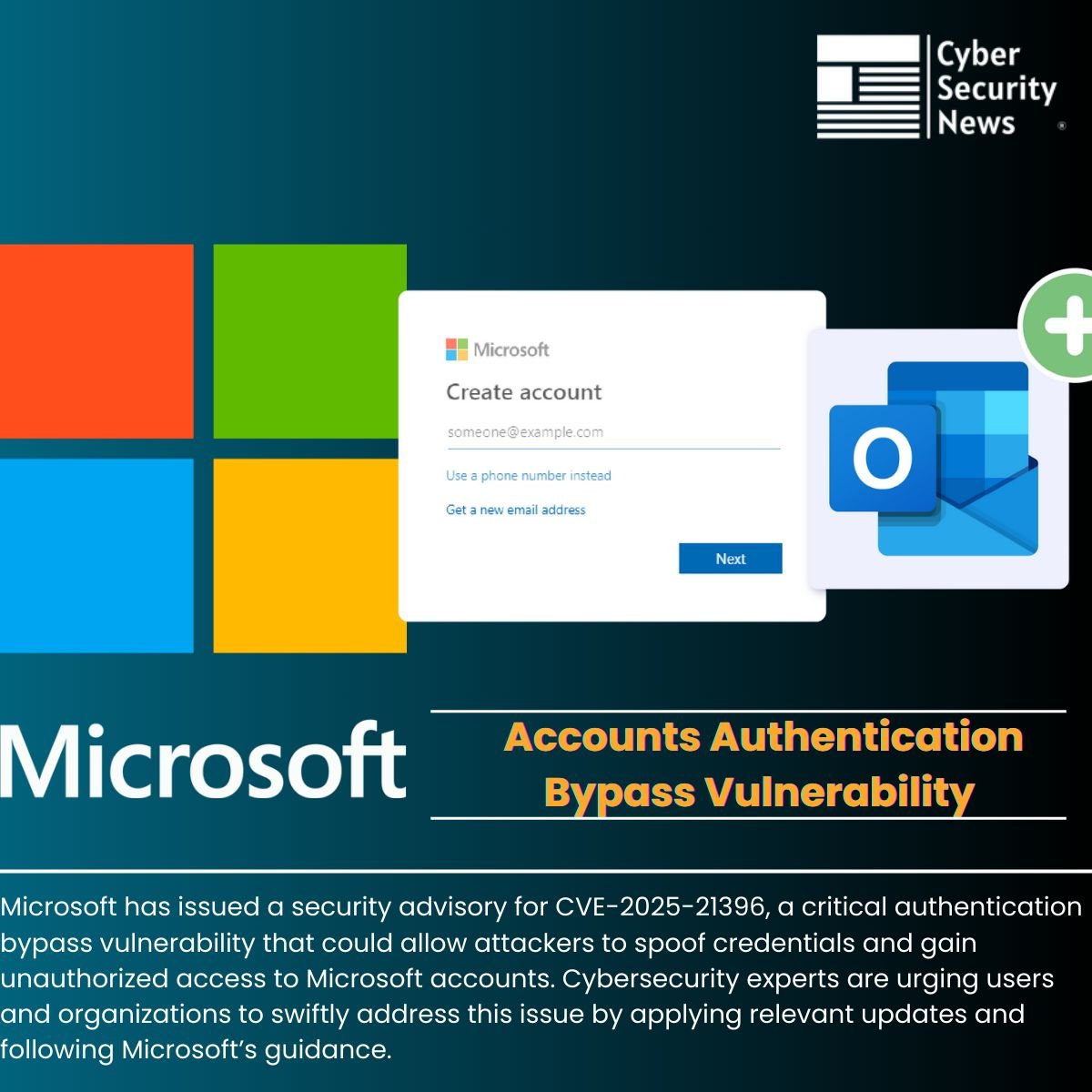
    In a crucial security update, Microsoft has issued an advisory for CVE-2025-21396, a critical authentication bypass vulnerability that could enable attackers to spoof credentials and gain unauthorized access to Microsoft accounts. Summit Systems strongly advises organizations and individuals to take immediate steps to mitigate the associated risks.

    Understanding CVE-2025-21396

    CVE-2025-21396 is associated with CWE-290 (Authentication Bypass by Spoofing), a recognized security weakness affecting authentication mechanisms that lack robust validation methods. Malicious actors can exploit trust-based authentication models using techniques such as:

    • IP Spoofing: Attackers forge source IP addresses to impersonate trusted systems and gain unauthorized access.
    • DNS Spoofing: Manipulating DNS responses to redirect users to attacker-controlled domains.
    • Malformed or Manipulated Requests: Exploiting weak validation logic in application-layer protocols to bypass authentication measures.

    Due to the prevalent reliance on IP and DNS-based trust models, this vulnerability poses a significant risk, necessitating immediate remediation.

    Attack Scenarios and Potential Impact

    The vulnerability may be exploited in multiple ways, including:

    • Bypassing IP-Based Authentication: Organizations that rely solely on IP addresses for authentication may be at risk, as attackers can forge IP addresses to appear as trusted entities, bypassing security measures.
    • DNS-Based Host Verification Manipulation: Attackers can poison DNS caches, causing systems to trust a malicious domain masquerading as a legitimate Microsoft service.

    Considering the relative ease of executing IP spoofing and DNS cache poisoning attacks, CVE-2025-21396 is classified as a critical vulnerability with a high likelihood of exploitation.

    Microsoft’s Security Guidance & Recommended Mitigations

    Microsoft has issued patches to address CVE-2025-21396 and urges all users and organizations to apply security updates without delay. Summit Systems further recommends the following best practices:

    1. Apply Security Updates: Regularly update all systems and software by following Microsoft’s Security Update Guide.
    2. Strengthen Authentication Mechanisms:
      • Implement Multifactor Authentication (MFA) for enhanced security.
      • Utilize cryptographic tokens for secure identity validation.
      • Deploy Mutual TLS (mTLS) for encrypted and authenticated connections.
    3. Monitor Networks for Anomalies: Deploy Intrusion Detection Systems (IDS) to detect spoofed packets and unusual DNS activity.
    4. Harden DNS Infrastructure: Implement DNS Security Extensions (DNSSEC) to safeguard against DNS spoofing and maintain data integrity.
    5. Enable Logging & Auditing: Maintain comprehensive logs of authentication attempts to facilitate forensic analysis in the event of an attack.

    While Microsoft has addressed CVE-2025-21396 with the latest security updates, organizations must take proactive measures such as strengthening authentication frameworks and enhancing network monitoring to reduce exposure to similar threats in the future.

    Media Disclaimer: This report is based on internal and external research obtained through various means. The information provided is for reference purposes only, and users bear full responsibility for their reliance on it. Summitsystemsissp assumes no liability for the accuracy or consequences of using this information.

  • Massive PowerSchool Data Breach Exposes Millions of Student and Educator Records

    Massive PowerSchool Data Breach Exposes Millions of Student and Educator Records

    The education sector is facing one of the most significant data breaches in recent history, as PowerSchool, a leading provider of Student Information Systems (SIS) in the U.S. and Canada, confirmed that hackers had stolen vast amounts of historical data from school districts. The breach, which has already impacted millions of students and educators, raises serious concerns about data security in educational institutions.

    On January 7, 2025, PowerSchool disclosed that attackers had accessed its SIS service through the PowerSource customer support portal. This breach enabled them to steal extensive personal data, including:

    • Names and contact information
    • Dates of birth
    • Medical records
    • Social Security numbers
    • Disability information
    • Race, ethnicity, and gender data
    • Parent/guardian/emergency contact details

    School districts confirmed that records dating back to 1985 were compromised, impacting over 72 million individuals, including 62.5 million students and 9.5 million educators across the U.S. and Canada.

    How Did This Happen?

    PowerSchool initially cited a “compromised credential” as the entry point for the breach. The Menlo Park City School District (MPCSD) reported that the compromised credential belonged to a maintenance account, granting broad access to customer data. Security researchers suspect that information-stealing malware may have been used to obtain this login information.

    The breach was detected on December 28, 2024, but evidence suggests that hackers had been exfiltrating data since December 22 using an export data manager. Despite working with cybersecurity firm CrowdStrike to investigate the breach, PowerSchool has not publicly disclosed further details about the attack.

    A Growing Crisis: Lawsuits and Fallout

    As more school districts reveal the extent of their data exposure, legal and reputational consequences for PowerSchool continue to mount:

    • Over 20 lawsuits have already been filed against the company.
    • School districts, including the Toronto District School Board (TDSB), reported that 1.5 million students were affected.
    • Data from 6,500 school districts may have been stolen, making this one of the largest education sector breaches to date.

    Despite claims that the stolen data was deleted after a ransom payment was made, PowerSchool is providing impacted individuals with two years of free identity theft and credit monitoring services.

    What Can Schools and Educators Do?

    Given the scale of this breach, affected institutions and individuals must take proactive steps to protect their data:

    1. Review Security Logs – Schools using PowerSchool’s SIS should analyze logs to determine the extent of data exfiltration.
    2. Monitor for Identity Theft – Impacted individuals should take advantage of PowerSchool’s credit monitoring offer and watch for suspicious activity.
    3. Strengthen Authentication Measures – Institutions should implement multi-factor authentication (MFA) and regularly rotate administrative credentials.
    4. Enhance Cybersecurity Training – Educators and administrators should be trained on recognizing phishing attempts and safeguarding sensitive information.

    Final Thoughts

    This breach highlights the urgent need for stronger cybersecurity measures in the education sector. Schools must reassess their security strategies to prevent future incidents, and vendors like PowerSchool must ensure that their systems are more resilient against cyber threats. Summit Systems is committed to helping organization bolster their cybersecurity defenses through advanced risk management strategies and compliance solutions.

    Media Disclaimer: This report is based on internal and external research obtained through various means. The information provided is for reference purposes only, and users bear full responsibility for their reliance on it. Summitsystemsissp assumes no liability for the accuracy or consequences of using this information.