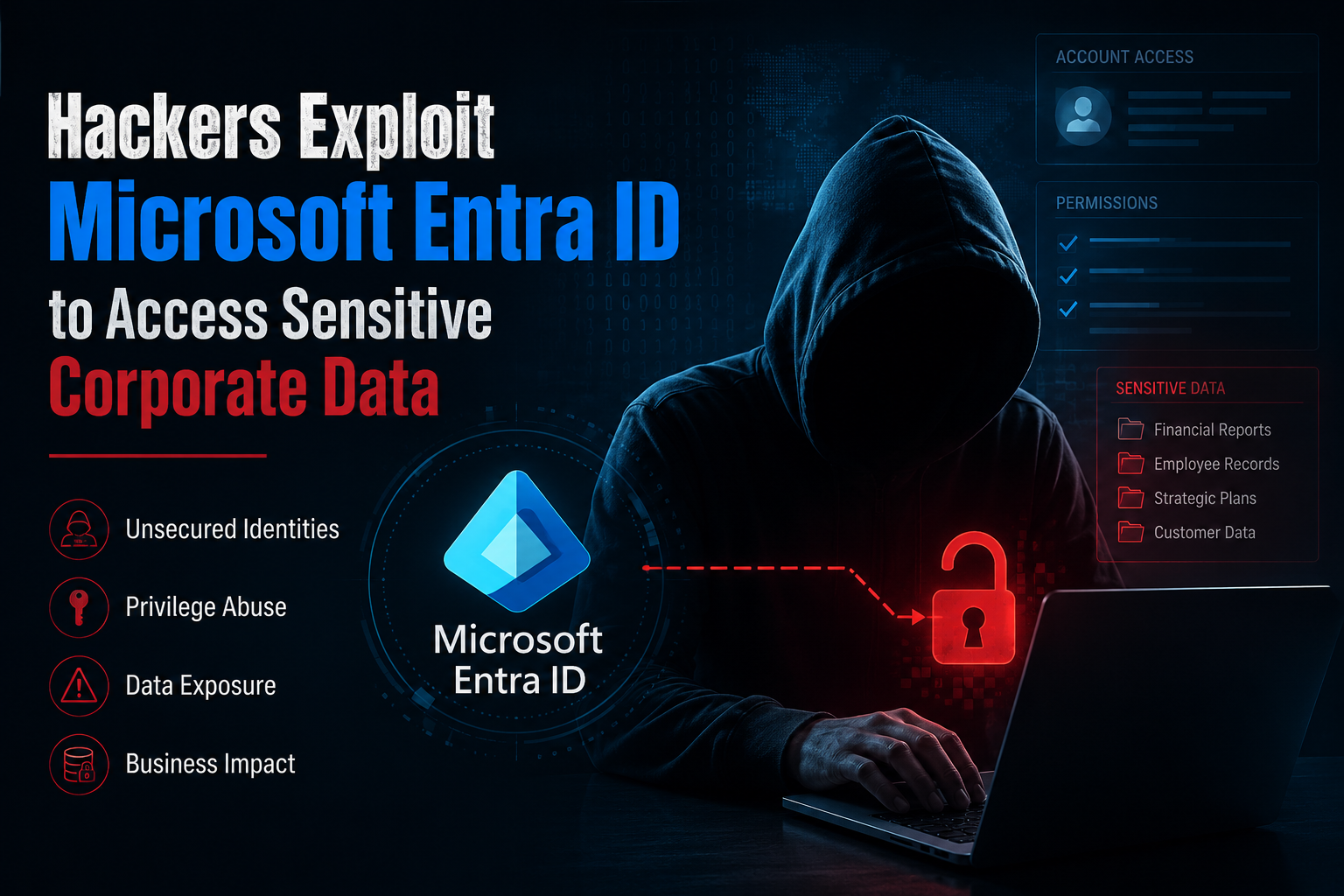
Cybercriminals are increasingly targeting cloud identity platforms, and recent reports reveal a concerning trend: attackers are abusing compromised Microsoft Entra ID accounts to gain unauthorized access to sensitive data stored across Microsoft 365 and Microsoft Azure environments.
Security researchers recently uncovered campaigns where threat actors leveraged tools such as TeamFiltration to target tens of thousands of Entra ID accounts globally. The attacks focused on account takeover, data exfiltration, and persistent access to enterprise cloud environments.
For organizations relying heavily on Microsoft’s cloud ecosystem, this serves as another reminder that identity is now the primary security perimeter.
Understanding the Attack
According to cybersecurity reports, attackers used compromised credentials, API abuse, and legitimate Microsoft services to bypass traditional security controls. In many cases, threat actors did not rely on malware; instead, they abused trusted authentication mechanisms already present within organizations.
The attack chain generally follows this pattern:
- Credential theft through phishing or social engineering
- Unauthorized login into Entra ID accounts
- Enumeration of Microsoft 365 and Azure resources
- Privilege escalation or persistence mechanisms
- Data exfiltration from cloud storage, email, and collaboration platforms
Researchers noted that attackers leveraged legitimate APIs and cloud administration features, making detection significantly harder because activities often appeared as normal user behavior.
Why Microsoft Entra ID Is a High-Value Target
Microsoft Entra ID acts as the central authentication and identity management layer for many enterprises. Once attackers gain access to an Entra ID account, they may inherit access to:
- Corporate emails
- SharePoint and OneDrive data
- Microsoft Teams conversations
- Azure virtual machines and storage
- Administrative dashboards
- Third-party SaaS integrations
Because Entra ID enables single sign-on (SSO), one compromised account can unlock multiple business-critical systems simultaneously.
Key Risks to Organizations
1. Silent Data Exfiltration
Attackers can quietly export sensitive business information without deploying ransomware or triggering endpoint alerts.
2. Persistence in Cloud Environments
Threat actors may create additional identities, OAuth applications, or tokens to maintain long-term access.
3. Abuse of Trusted Tools
Using legitimate Microsoft APIs and administrative functions helps attackers evade conventional security monitoring.
4. Business Disruption and Compliance Exposure
Stolen customer data, intellectual property, or financial records can lead to operational downtime, reputational damage, and regulatory penalties.
Indicators of Compromise
Organizations should watch for:
- Unusual login locations or impossible travel events
- Suspicious OAuth application consent grants
- Excessive Microsoft Graph API activity
- Unexpected mailbox exports or SharePoint downloads
- Privilege escalation attempts
- Dormant accounts suddenly becoming active
Continuous monitoring of identity activity is now essential for modern cybersecurity operations.
How Organizations Can Protect Themselves
Enable Multi-Factor Authentication Everywhere
Strong MFA significantly reduces the effectiveness of credential theft attacks.
Implement Conditional Access Policies
Restrict access based on device trust, geography, user risk, and session behavior.
Adopt Least Privilege Access
Limit administrative privileges and regularly review access permissions.
Monitor Identity and API Activity
Deploy advanced identity threat detection and cloud security monitoring solutions.
Review OAuth and Third-Party Integrations
Attackers increasingly exploit excessive permissions granted to cloud applications.
Conduct Regular Security Awareness Training
Social engineering and phishing remain the most common entry points for attackers.
The Bigger Cybersecurity Lesson
Modern cyberattacks are shifting away from traditional malware toward identity-centric compromise. Attackers understand that cloud identities provide direct access to business operations, making them more valuable than endpoints alone.
The abuse of Microsoft Entra ID accounts demonstrates how threat actors are evolving to exploit trust relationships within cloud ecosystems rather than relying solely on software vulnerabilities.
Organizations must therefore move beyond perimeter-based security and adopt an identity-first security strategy that prioritizes:
- Continuous authentication
- Real-time monitoring
- Zero Trust architecture
- Cloud-native threat detection
- Proactive incident response
Final Thoughts
The recent Entra ID abuse campaigns reinforce a critical reality: identity security is business security. As enterprises continue migrating workloads to the cloud, protecting identity platforms becomes essential to safeguarding data, operations, and customer trust.
At Summit Systems ISSP, we encourage organizations to continuously assess their cloud security posture, strengthen identity protection mechanisms, and invest in proactive cybersecurity strategies that can detect and respond to modern threats before significant damage occurs.
Cybercriminals are evolving rapidly — and organizations must evolve even faster.
Media Disclaimer: This report is based on internal and external research obtained through various means. The information provided is for reference purposes only, and users bear full responsibility for their reliance on it. Summitsystemsissp assumes no liability for the accuracy or consequences of using this information.