
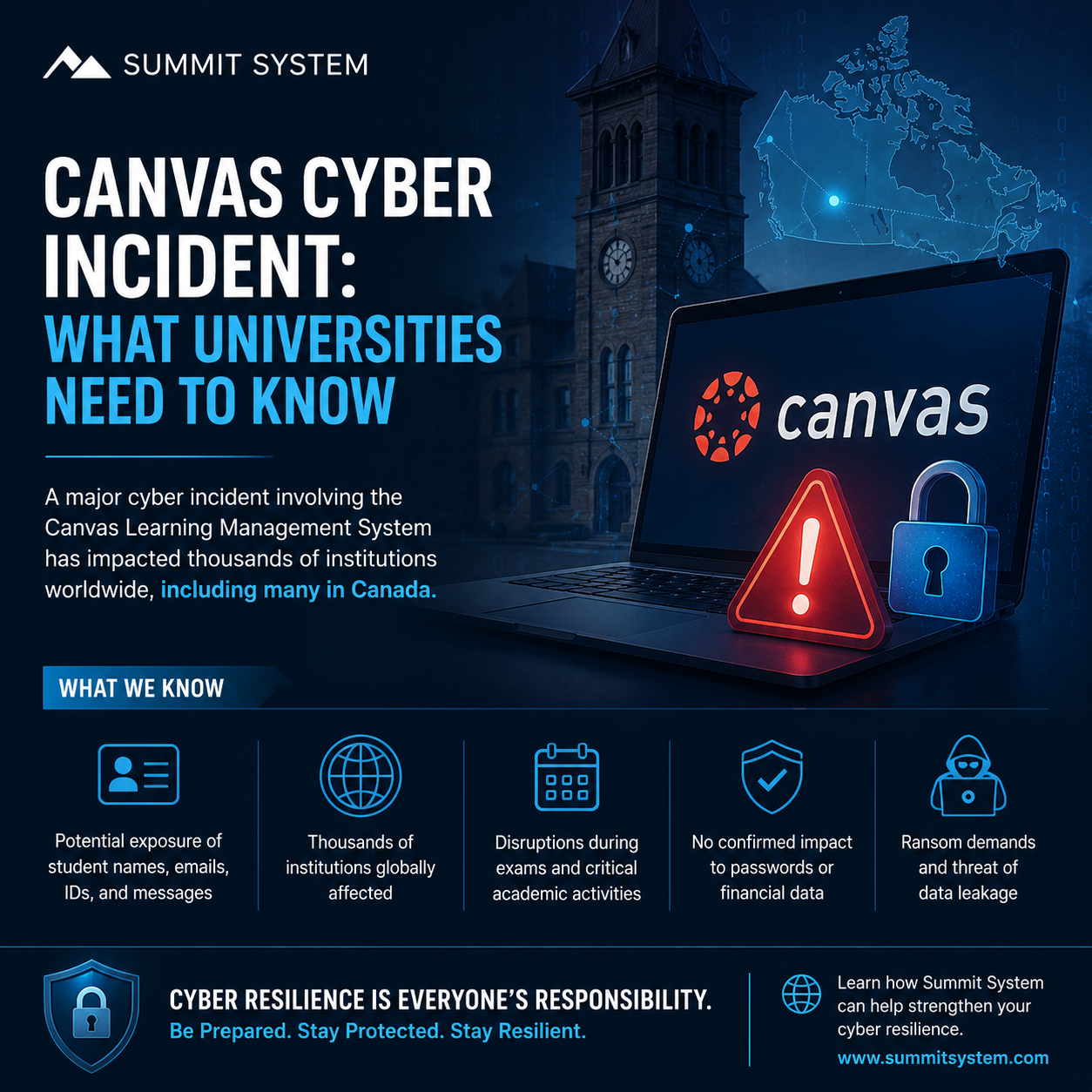
The recent cyber incident involving the widely used Canvas Learning Management System (LMS) has become a wake-up call for universities and educational institutions around the world. Over the weekend, reports emerged that hackers targeted the platform used by thousands of schools and universities globally, disrupting online learning activities during one of the most critical periods of the academic calendar.
For institutions that depend heavily on digital learning environments, the incident highlights an uncomfortable reality: education has become a prime target for cybercriminals.
What Happened?
Canvas, developed by Instructure, is one of the world’s most widely adopted learning management systems. The platform enables universities to manage coursework, assignments, exams, student communications, and online collaboration.
According to public reports, threat actors allegedly gained unauthorized access to portions of the platform and disrupted services for multiple institutions. Some universities temporarily restricted access while investigations were underway.
Early reports suggest that exposed information may include:
- Student names
- Email addresses
- Student identification numbers
- Internal messages and academic communications
At the time of reporting, there has been no confirmed evidence that financial information or passwords were compromised. However, the event caused significant operational disruption during examination and coursework submission periods.
Why Educational Institutions Are Increasingly Targeted
Universities are particularly attractive to cybercriminals for several reasons:
1. Large Volumes of Sensitive Data
Educational institutions store:
- Student records
- Research data
- Financial information
- Staff credentials
- Intellectual property
This makes universities valuable targets for ransomware groups and data theft operations.
2. Complex IT Environments
Many institutions operate:
- Legacy systems
- Hybrid cloud environments
- Third-party learning platforms
- Open networks for students and faculty
These interconnected systems can create security gaps if not continuously monitored and maintained.
3. High Dependence on Availability
When learning platforms go offline, academic operations can halt immediately. Cybercriminals understand the pressure institutions face during exams, admissions periods, and registration cycles.
The Bigger Lesson: Cybersecurity Is Now Operational Risk Management
The Canvas incident demonstrates that cybersecurity is no longer just an IT issue — it is an operational continuity issue.
Organizations must prepare for:
- Third-party vendor compromises
- Supply chain attacks
- Credential theft
- Ransomware attempts
- Data exfiltration incidents
Even when an institution’s internal systems remain secure, vulnerabilities in external service providers can still create major disruption.
Key Cybersecurity Measures Institutions Should Prioritize
To strengthen resilience against similar incidents, organizations should consider:
Vendor Risk Assessments
Evaluate the cybersecurity posture of all third-party platforms and software providers.
Multi-Factor Authentication (MFA)
Reduce the risk of credential-based attacks by enforcing MFA across critical systems.
Continuous Monitoring
Implement real-time threat monitoring and incident detection capabilities.
Incident Response Planning
Develop and regularly test response plans for cyber incidents and service outages.
Data Backups and Recovery
Ensure secure backups are maintained and recovery procedures are validated.
Security Awareness Training
Educate staff and users on phishing, credential security, and suspicious activity reporting.
Final Thoughts
The Canvas cyber incident is another reminder that digital transformation must be matched with strong cybersecurity governance. As educational institutions continue to expand online learning and cloud-based collaboration, proactive cyber resilience becomes essential.
At Summit Systems ISSP, we believe organizations must move beyond reactive security measures and adopt a comprehensive approach that combines prevention, detection, response, and recovery.
Cyber threats are evolving rapidly — and resilience is now a critical business requirement, not an optional investment.
Media Disclaimer: This report is based on internal and external research obtained through various means. The information provided is for reference purposes only, and users bear full responsibility for their reliance on it. Summitsystemsissp assumes no liability for the accuracy or consequences of using this information